

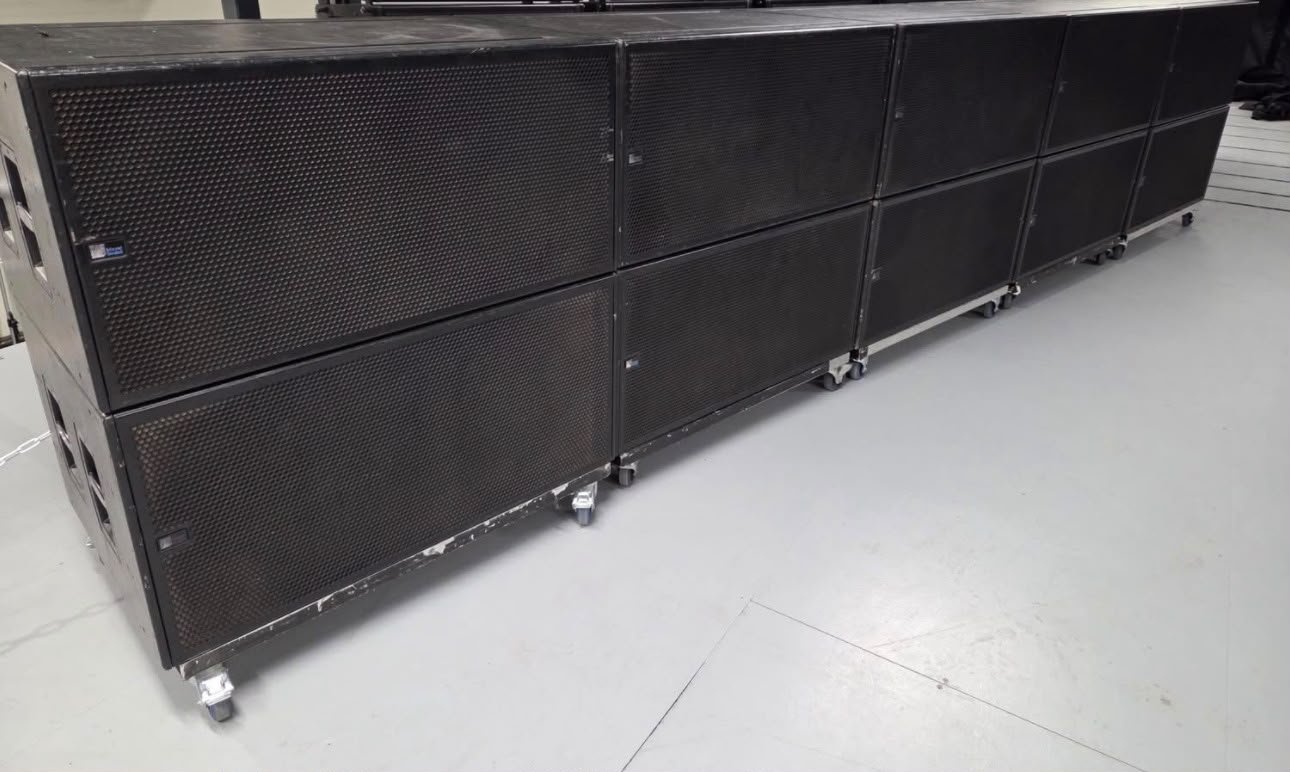
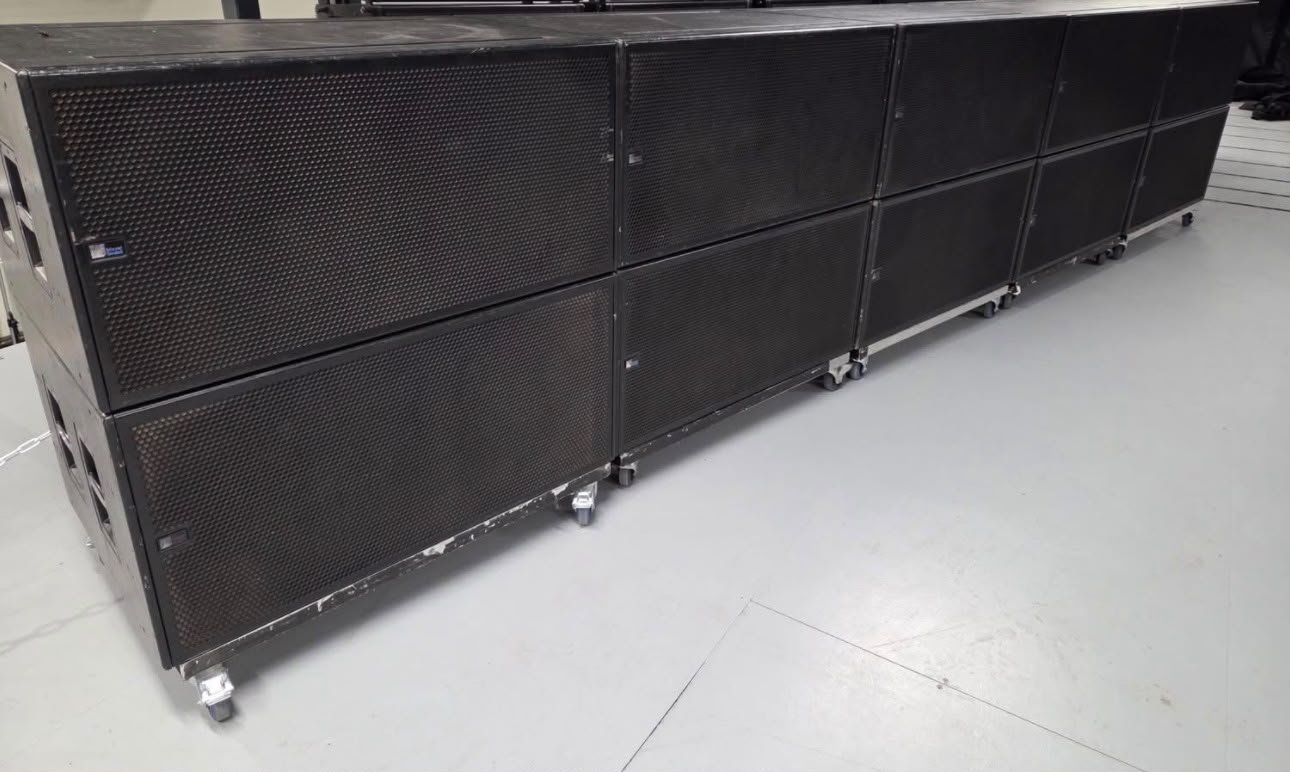


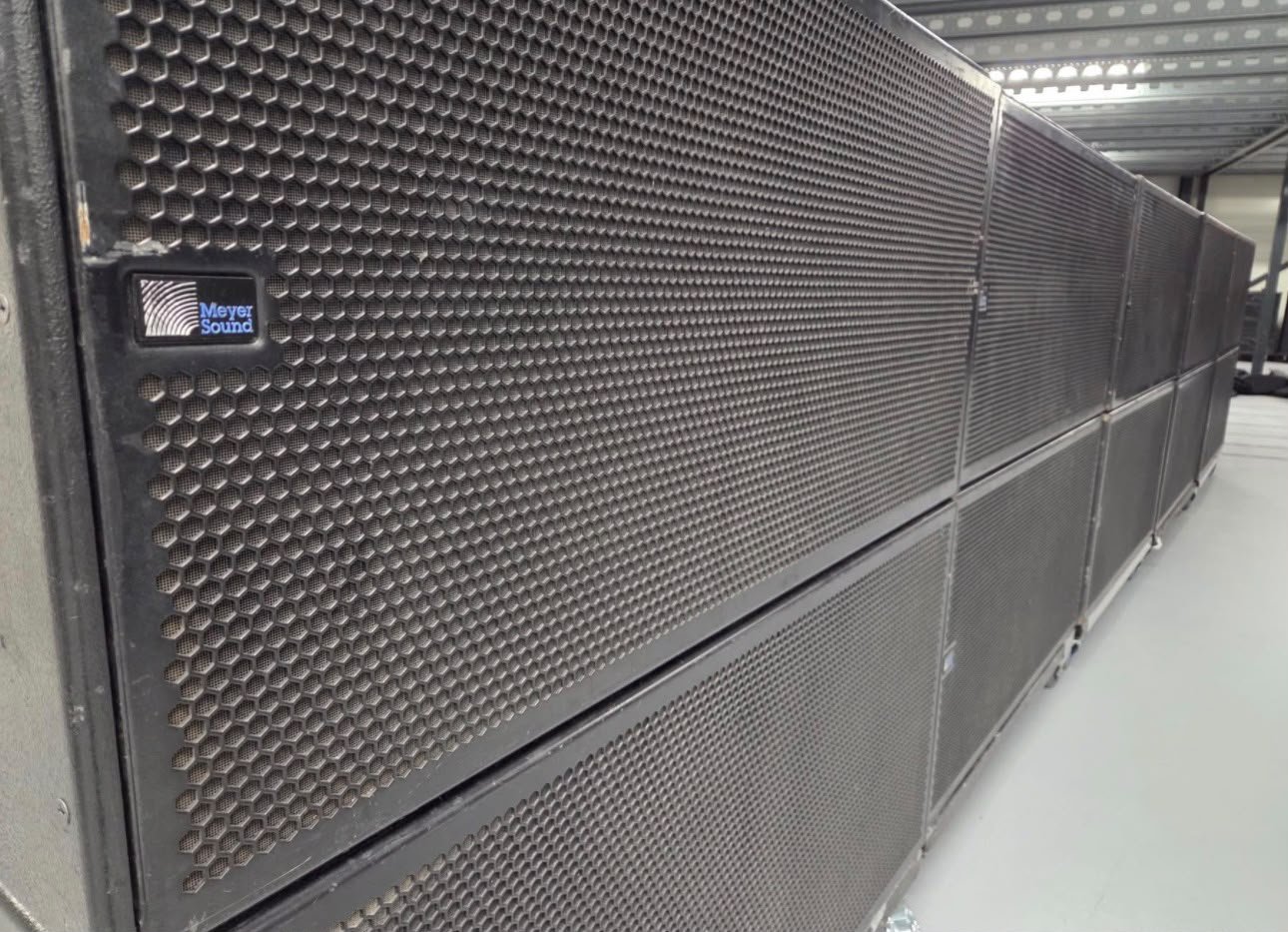

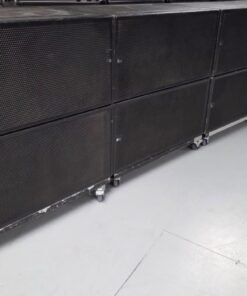


Meyer Sound 700-HP Powered Subwoofer for Professional Sound
Meyer Sound 700-HP is a self-powered, dual 18-inch professional subwoofer designed for sound systems that need substantial low-frequency output. Built for demanding concerts and large-scale productions, it brings together two long-excursion drivers, integrated amplification and internal processing in one enclosure.
For a production company, rental business or venue, the 700-HP offers a way to add powerful bass reinforcement to a professional system without using a separate amplifier for each cabinet. It can be deployed alongside suitable Meyer Sound main loudspeakers and configured as part of a complete system designed for the venue and event.
Sound Pro Tech offers information on used professional audio equipment for buyers in France and beyond. If you are considering a Meyer Sound 700-HP, contact our team to confirm current availability, the condition of the specific units and the accessories supplied with them. Those details should be checked for each unit before an order is placed.
Dual 18-Inch Drivers for Deep Bass
At the heart of the Meyer Sound 700-HP are two back-vented, long-excursion 18-inch cone drivers. Each driver has a 4-inch voice coil. The drivers and cabinet were designed together to produce strong low-frequency output while handling the demands of professional sound reinforcement.
The published operating frequency range is 28 Hz to 150 Hz. Meyer Sound also specifies a free-field frequency response of 30 Hz to 125 Hz, ±4 dB. This distinction matters: the operating range describes the frequencies the product is intended to cover, while the response figure describes its measured output within a stated tolerance.
In practical terms, the subwoofer can reproduce the low-end energy that gives kick drums, bass instruments and electronic music their weight. The final result will depend on the number of cabinets, their placement, the room or outdoor site, the main loudspeakers and the system settings.
For applications that call for a physical, high-output bass experience, multiple 700-HP cabinets can be arranged as part of a properly designed low-frequency system. A technician can determine the quantity and layout needed for the audience area and desired sound level.
High Output for Demanding Productions
The Meyer Sound 700-HP has a published maximum peak sound pressure level of 139 dB at one metre, measured with music. This specification helps explain why the model has been used for large professional applications, although it should not be treated as a prediction of the level at every audience position.
Output across a venue depends on distance, placement, the number of units and how the subwoofers interact with one another. Ground placement, nearby boundaries and the arrangement of multiple cabinets can all affect the bass that listeners hear.
That is why system design matters as much as the individual subwoofer specification. A suitable layout can help achieve more consistent low-frequency coverage and make better use of the available equipment. For a large concert or permanent installation, the system should be planned for the actual venue rather than selected solely by cabinet count.
The 700-HP is a substantial professional cabinet. Its output capability makes sense in applications where a compact portable subwoofer would not provide the required headroom.
Built-In Amplification and Processing
Each Meyer Sound 700-HP contains an integrated two-channel Class AB/H amplifier. Meyer Sound specifies a total burst capability of 2,250 watts, with one amplifier channel assigned to each 18-inch driver.
Because the amplifier is built into the cabinet, the system does not require a separate external power amplifier to drive the subwoofer. This can simplify an equipment package, but the cabinet still needs suitable AC power distribution and an appropriate audio signal.
Internal processing works with the drivers and amplifier as a complete system. The published design includes protection circuitry, including Meyer Sound’s TruPower limiting. These features help the loudspeaker operate within its intended parameters when correctly installed and used.
A self-powered design can also make it easier to expand a system one cabinet at a time. Each additional subwoofer brings its own amplifier channels. The power plan, signal routing and system alignment still need to be reviewed whenever the system grows.
Designed to Work With Professional Main Loudspeakers
A subwoofer supplies the lowest portion of a sound system’s output. Main loudspeakers reproduce the rest of the musical range, including the vocal and instrumental detail that sits above the subwoofer’s operating band.
The Meyer Sound 700-HP was designed to complement professional Meyer Sound reinforcement systems, including suitable line arrays and other main loudspeakers. The best pairing depends on the scale of the event and the performance expected from the complete system.
A system processor can help manage routing, equalisation, crossover settings, level and timing between the subwoofers and main loudspeakers. Good alignment is especially valuable around the crossover region, where both parts of the system contribute to the sound.
If you already own Meyer Sound loudspeakers, tell Sound Pro Tech which models you use and how many cabinets are in your system. That information can help frame a more useful discussion about the number of 700-HP subwoofers and any additional equipment your setup may require.
Flexible Placement and System Layout
A single 700-HP has an omnidirectional low-frequency coverage characteristic. When several units are placed together, the resulting coverage changes with their quantity and configuration.
Subwoofers may be positioned as a central group, distributed across the front of a stage or incorporated into another professionally designed layout. Each approach affects the listening area differently. Venue width, stage layout, audience position and available space all influence the choice.
For touring events, a repeatable placement plan can make setup more efficient. For a fixed installation, the design can be developed around the venue’s seating and architectural constraints. In either case, measurements after setup help confirm how the system performs in the real space.
Buyers planning a multi-unit purchase should also consider how the cabinets will be moved, stored and connected. A suitable transport and power plan is part of making a high-output subwoofer system practical to operate.
Construction, Size and Transport
The Meyer Sound 700-HP uses a sturdy multi-ply hardwood enclosure with a black textured finish. The cabinet was designed for professional use, where equipment may be moved between events or installed for long periods.
The published cabinet dimensions without optional rigging are approximately 1167 mm wide × 572 mm high × 762 mm deep. The specified weight is approximately 92.5 kg. Optional rigging changes the overall width and weight, so a buyer should check the exact configuration of the units being offered.
These measurements are important for transport planning. Confirm that the cabinet will fit through venue access points, loading areas and storage spaces. If delivery is required, provide the full address and any access details that could affect unloading.
Optional transport or rigging accessories should be confirmed separately. Do not assume that caster frames, covers, rigging components, power cables or signal cables are included with a used unit unless they appear on the quotation or invoice.
Suitable Applications
The Meyer Sound 700-HP can be considered for professional applications that require powerful bass reinforcement, including concerts, festivals, touring productions, clubs, theatres and larger event spaces.
It may also interest audio rental companies expanding an existing Meyer Sound inventory. Matching subwoofers can help a rental business build systems in different sizes while keeping equipment preparation and operation familiar to its technicians.
For an installation, the important questions are how much low-frequency output the venue needs, where cabinets can be placed and how the system will be controlled. A venue with a challenging layout may need a different subwoofer arrangement from an open performance space, even when the audience size is similar.
The right solution is a complete system design. The 700-HP supplies the low-frequency capability; the main loudspeakers, processing, placement and tuning determine how that capability reaches the audience.
What to Check When Buying a Used 700-HP
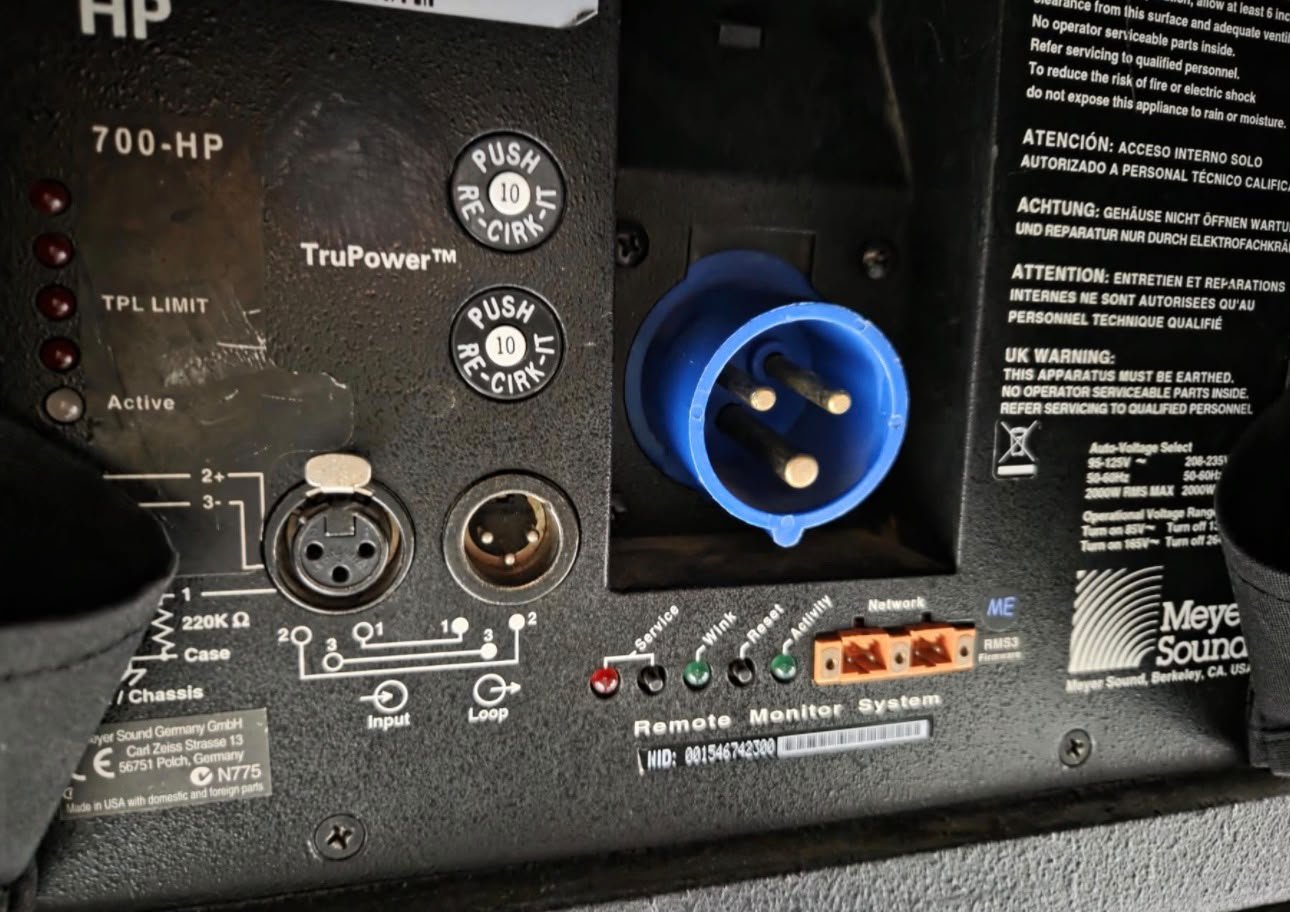
The Meyer Sound 700-HP is a legacy product, so the details of a used unit matter. Ask for current photographs of the front, sides and rear panel, along with the serial number and connector configuration.
Confirm that both 18-inch drivers and both amplifier channels have been tested. It is also sensible to check the audio input, AC connection, cabinet, grille and any included transport or rigging hardware. If you are buying multiple units, ask whether they have matching configurations.
The power and signal connectors can vary by version. Check clear rear-panel photographs before arranging cables or planning power distribution for an existing system.
Cosmetic wear should be described separately from operating condition. Marks from normal professional use do not necessarily affect performance, but the listing should make the condition of the actual units clear. Confirm all supplied accessories in writing before purchasing.
Enquire With Sound Pro Tech
Sound Pro Tech can help you review the Meyer Sound 700-HP as part of a professional audio purchase. Tell us how many units you need, which main loudspeakers you intend to use and where the equipment must be delivered.
We can then confirm available units, their condition, included accessories and a quotation based on your requirements. If you are planning a complete sound system, include details of your existing equipment and the intended application so the enquiry can be handled accurately.
For used equipment, photographs and written specifications should refer to the units currently offered. Contact https://soundprotech.shop/the latest product information and to discuss the 700-HP configuration that fits your project.
Be the first to review “`Meyer Sound 700-HP Subwoofer”
Related products
Speakers & subwoofers

Speakers & subwoofers


Speakers & subwoofers

Speakers & subwoofers

Speakers & subwoofers


Speakers & subwoofers

Speakers & subwoofers

Speakers & subwoofers
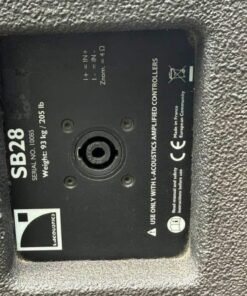
L-Acoustics SB28 Subwoofer – Features, Specifications & Price
Reviews
There are no reviews yet.